How to Spot Automotive Arson: Was it Really an Accident?
Every year, tens of thousands of vehicles go up in flames under suspicious circumstances. Some are fraud. Some are revenge, and occasionally - as one Tennessee YouTuber can attest to, some are just the result of driving a $400,000 Ferrari through a hay field at full speed. Welcome to the world of automotive arson, where the evidence is literally on fire and the truth is rarely straightforward. Or is it?
By Carla Rodriguez | May 20, 2026 | 3 min. read
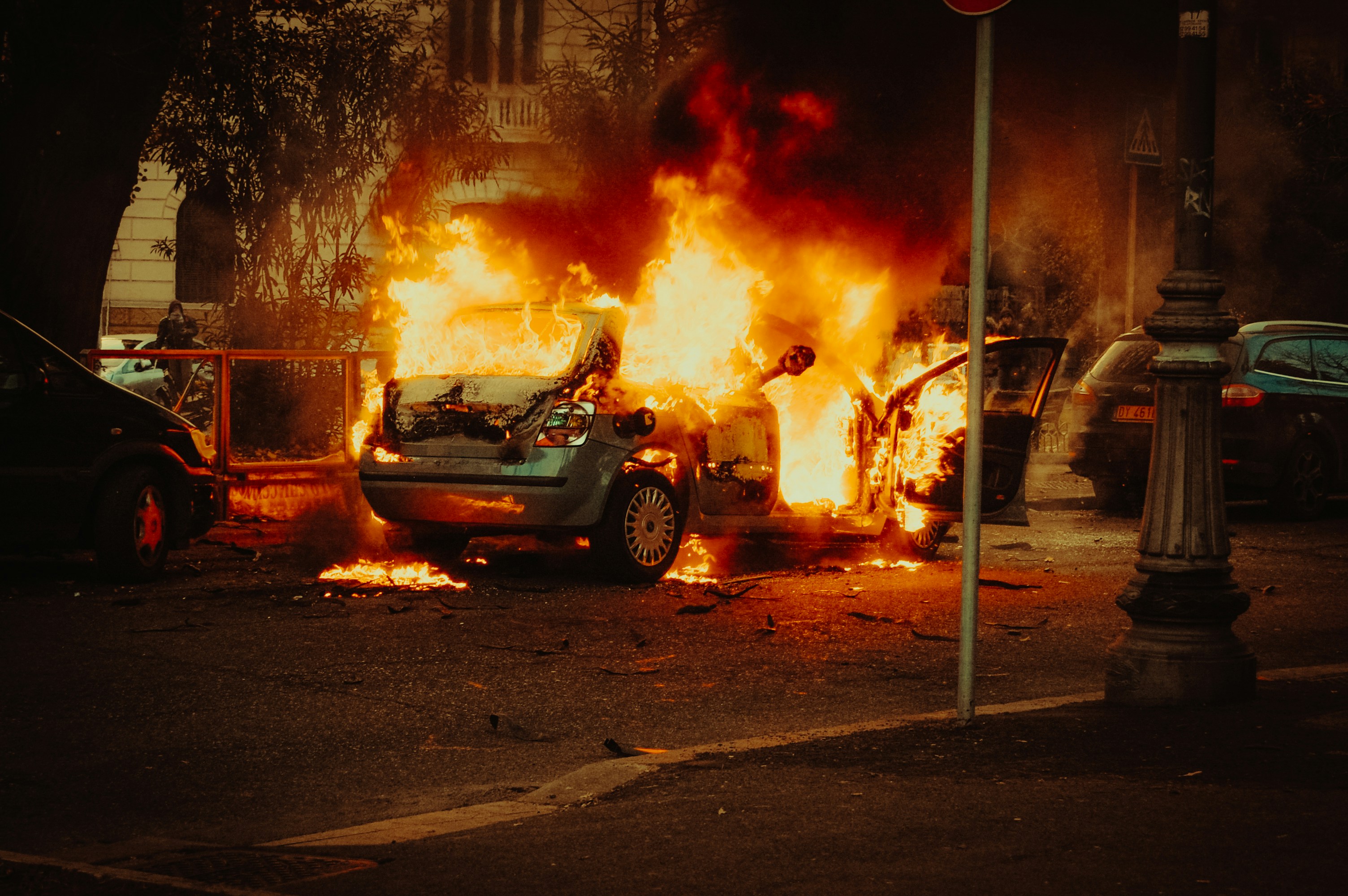
Automatic arson might spark curiosity, but for insurance adjusters, investigators, and claims professionals, a burning vehicle is far less cinematic than it seems in an action movie. Behind every charred frame is a question that needs answering: was this an accident, or was it intentional?
According to FEMA,** nearly 28,000 intentional vehicle fires are set each year in the United States,** resulting in an average of 40 deaths, 75 injuries, and $169 million in property damage annually.
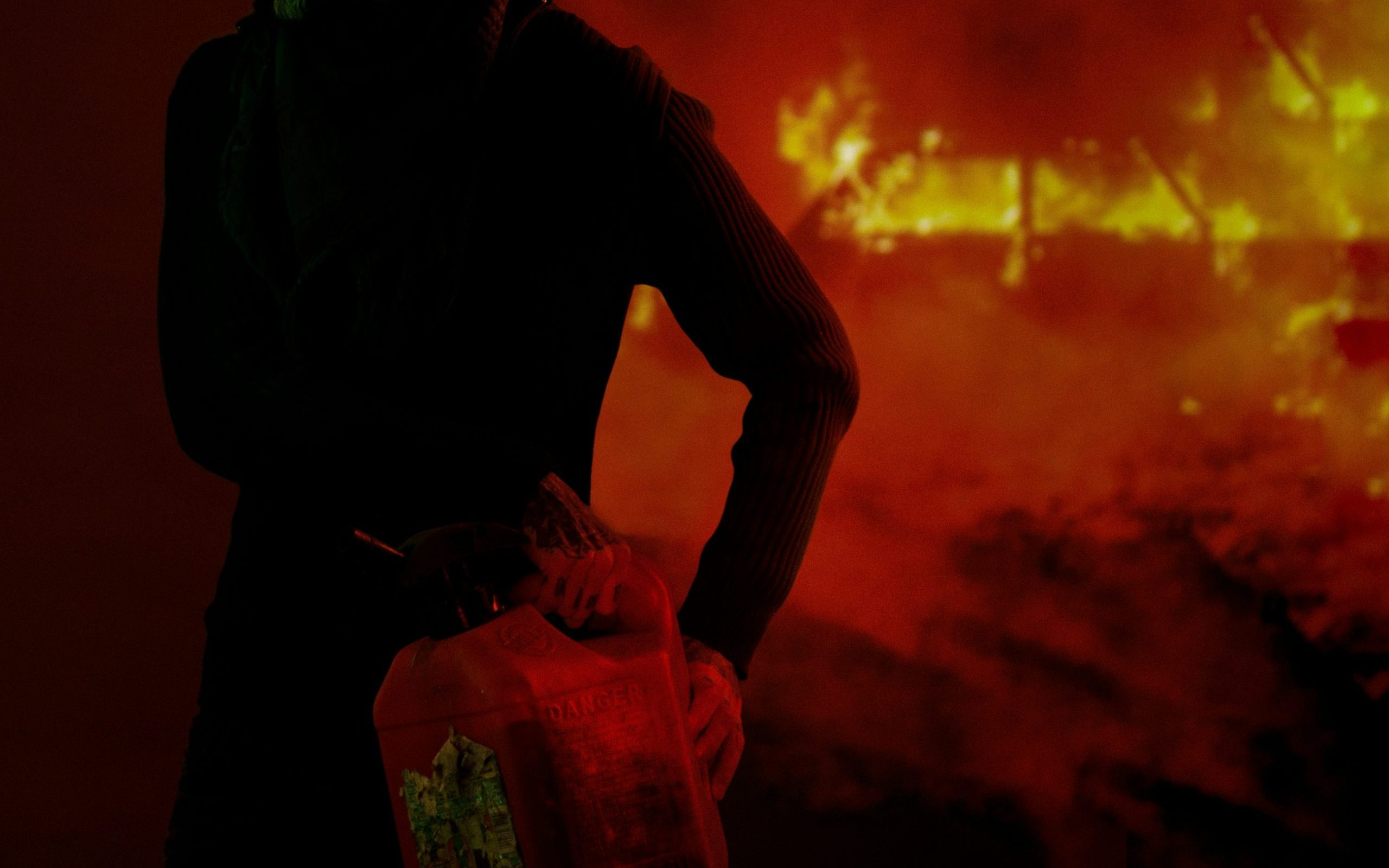
That’s not a rounding error – that’s a staggering cost absorbed by the insurance industry, law enforcement, and ultimately, policyholders. And according to the National Fire Protection Association, two-thirds of those intentionally set vehicle fires occur after dark, between 9 PM and 6 AM, when the chances of being seen are lowest and the cover of night provides a convenient alibi.
So how do you tell the difference between a legitimate loss and a torch job? The answer lies in the details.
The Obvious Signs
Sometimes the signs of automotive arson are refreshingly unambiguous. A Molotov cocktail tucked under the wheel well. A rag stuffed into the fuel tank. These are the cases that don’t keep investigators up at night. But more often than not, the evidence is subtler, and the difference between an accidental fire and an incendiary one comes down to a careful, methodical examination of what the fire left behind.
Examine the Fuel System First
One of the most productive places to begin any vehicle fire investigation is the fuel system. Inspect the fuel lines, fuel pump, fuel injectors, fuel rail, and fuel tank for signs of tampering.
What will this look like? Tool marks, disturbed components, or damage that doesn’t align with the burn pattern.
These signs are often made using metal or reinforced plastic, which means they can survive significant heat exposure while still retaining physical evidence of manipulation.
Pay particular attention to injector connections and access points to the fuel pump. These are commonly targeted areas when someone wants to introduce an ignition source or compromise the system in a way that appears accidental.
If you’re dealing with a hybrid or electric vehicle, the investigation expands considerably. In a hybrid, both the traditional fuel system and the high-voltage battery system need to be examined for signs of interference. For fully electric vehicles, the focus shifts to the battery pack, charging components, and high-voltage cabling. Look for tool marks, cut or displaced wiring, or damage that doesn’t match the expected fire patterns. These components can retain evidence of tampering even after significant fire exposure if you know where to look.
Fire Behavior Doesn’t Lie
Here’s something everyone in claims investigation needs to know: a fire that originates in a compartmentalized area of a vehicle, say, under the hood around the engine, does not naturally spread to the rest of the car without help.
Vehicle compartments are designed with some degree of fire containment in mind. If the fire jumps those compartments and engulfs the entire vehicle, that’s a significant red flag.
The same principle applies to windows. It takes an extraordinary amount of heat to melt automotive glass. Under normal fire conditions, a vehicle fire simply does not generate that kind of temperature. If the windows are melted, investigators should be asking what accelerant was used because the fire almost certainly had help getting that hot.
The Personal Property Question
It’s a detail that seems almost too obvious to mention, yet it comes up again and again in automotive arson cases: were any of the owner’s personal belongings in the vehicle at the time of the fire? A car fire is, by definition, a surprise. Accident victims don’t typically have time to remove their gym bag, their laptop, or their kids’ car seats, before the vehicle ignites.
When a vehicle burns and it just so happens that all of the owner’s valuables were conveniently removed beforehand, that coincidence deserves serious scrutiny.
Follow the Mechanical History
A vehicle with a serious underlying mechanical problem such as a failing engine, a blown drivetrain, or major body damage requiring costly repair, represents a financial burden that some owners would rather not carry. When the cost of fixing a vehicle approaches or exceeds its value, the temptation to “let the insurance handle it” can become a powerful motivator.
Dig into the vehicle’s service history. Were there recent repair estimates? Was the vehicle recently appraised or traded in at a significant loss? Was major work recommended but declined? These details can establish a financial motive that transforms a suspicious fire into a compelling case.
Don’t Overlook the Battery
When a claimant suggests that an electrical short caused the fire, there’s a straightforward way to evaluate that theory: test the battery. Even post-burn, battery testing can reveal the charge level at the time of the fire. A fully charged battery does not support the electrical short narrative. A depleted one might. It’s a small detail that can carry significant weight in determining whether the claim holds up.
The Stolen Vehicle Angle
Pay close attention to any claim where the vehicle was first reported stolen before the fire was discovered. This is one of the most well-established patterns in automotive arson fraud. In the majority of arson cases where the owner is ultimately found to be involved, the theft report comes first.
It’s a preemptive attempt to create distance between the owner and the act. If there’s a theft report in the file, examine the ignition system carefully for signs of tampering. Look for evidence of a staged break-in. And ask the obvious question: if the car was stolen, why was it torched rather than sold or stripped?
The New Frontier: EVs, Autonomous Vehicles, and Civil Unrest
Automotive arson isn’t just an insurance fraud problem anymore. In recent years, a new category of intentional vehicle fire has emerged – one driven not by financial motive but by political and ideological ones.
During civil unrest events in 2025, autonomous and electric vehicles became symbolic targets. Waymo self-driving taxis and Tesla vehicles were set ablaze across multiple U.S. cities, often in groups and with accelerants used to ensure rapid ignition. These fires present a unique set of investigative challenges that the industry is still learning to navigate.
Electric vehicle battery fires burn extraordinarily hot, are notoriously difficult to extinguish, and can reignite hours or even days after the fire appears to be out. The intense heat generated by a lithium-ion battery fire can destroy onboard vehicle data that might otherwise be invaluable in determining the origin and cause of the fire. When that data is gone, investigators must rely more heavily on physical evidence and witness accounts.
These trends signal that claims investigators need to be fluent in EV technology, not just combustion engines
A Word of Balance
Before we close, a dose of perspective is warranted. Not every vehicle fire is fraud. Not every suspicious circumstance leads to a criminal finding. Vehicles are complex machines with countless components that can fail, and genuine, accidental fires can happen every day.
And then there are the cases that defy easy categorization. Take Whistlin Diesel, a Tennessee-based YouTuber known for destroying expensive vehicles in the name of content. During one memorable episode, he drove a Ferrari F8 Tributo (a $400,000 machine) through a hay field at speed. The friction generated by the car’s undercarriage was enough to ignite the dry hay, and the entire vehicle was lost to fire. No fraud. No arson. Just a man, a supercar, and a hay field making history together.
The point is this: the job of the investigator is not to assume arson, but to follow the evidence wherever it leads and to know the difference between the red flags that point to foul play and the circumstances that simply point to an unfortunate day.
Interested in more about this topic? Browse our library of free CEU webinars.
Click here to view all of our blogs about Arson fraud.
Check out our sources:
United States, Department of Homeland Security, U.S. Fire Administration, National Fire Data Center. Intentionally Set Vehicle Fires. Topical Fire Report Series, vol. 9, no. 7, Dec. 2009, www.usfa.fema.gov/downloads/pdf/statistics/v9i7.pdf.
“YouTuber Buys a $500,000 Ferrari F8 Tributo and Sets About Destroying It.” Drive, 23 Feb. 2023, www.drive.com.au/news/youtuber-buys-a-500000-ferrari-f8-tributo-and-sets-about-destroying-it/.