AI in SIU Investigations: Tools, Threats, and Trends
Insurance fraud has evolved far beyond traditional schemes, driven by AI, deepfakes, and synthetic identities that are harder than ever to detect. This blog explores how fraudsters are leveraging advanced technology to exploit gaps in the claims process and why SIU teams must adapt quickly to keep pace. It breaks down emerging threats like AI-generated evidence and voice fraud, while highlighting the growing role of AI as a powerful investigative tool for early detection and smarter triage.
By Caroline Caranante | May 6, 2026 | 3 min. read

What you will find below:
- How AI is Reshaping Insurance Fraud
- The Biggest Emerging Threats
- How SIU Teams are Using AI for Faster, Smarter Fraud Detection
- Best Practices for SIU Teams
Insurance fraud is no longer just exaggerating a fender bender claim or a slip-and-fall at a grocery store that never quite happened. Those cases still exist, but the threat landscape today looks nothing like it did even five years ago. Fraudsters have access to tools that would have seemed like science fiction a decade ago, and they’re using them aggressively, creatively, and at scale. SIU investigations must keep pace.
SIU Investigations Must Evolve With Increasing Threat
The Coalition Against Insurance Fraud (CAIF) puts the annual price tag of insurance fraud at over $308.6 billion, a figure that spans healthcare fraud at an estimated $105 billion, property and casualty at $50 billion, and workers’ compensation schemes running anywhere from $32 to $44 billion.
And it’s getting worse. The National Insurance Crime Bureau (NICB) has been watching a particularly alarming trend: identity-based fraud schemes are exploding. An analysis of thousands of questionable claims submitted from 2022 through 2025 revealed a significant year-over-year climb in claims tied to either traditional identity theft or synthetic identities. Nearly a quarter of all claims referred to NICB with an identity theft component involved a synthetically generated identity, meaning the person behind the claim may not fully exist at all.
As David J. Glawe, the President & CEO of NICB, put it:
Identity theft and the use of synthetic identities are the foundation for life insurance, medical-related fraud and cargo theft. The ever-changing digital environment, coupled with artificial intelligence, has enabled criminals to create bogus identities and pose as a deceased person’s beneficiary to collect life insurance payouts, submit false medical expenses to receive reimbursement, or even reroute goods for sale on the black market.
That’s the operational reality fraud rings are exploiting right now. These aren’t lone scammers; they’re organized, adaptive, and always looking for the path of least resistance through the claims process.
AI-Generated Fraud to Watch for in SIU Investigations
Deepfakes & Synthetic Identities
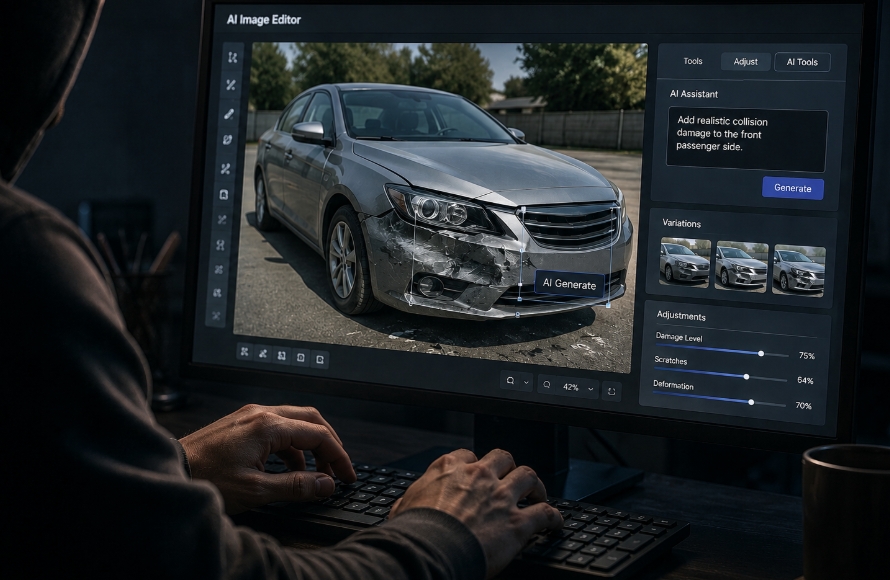
Recent industry estimates suggest that 25€“30% of claims today involve AI-altered fake images, medical reports, or valuation certificates. At least one in four questionable claims may contain fabricated digital evidence, and it’s increasingly indistinguishable to the naked eye.
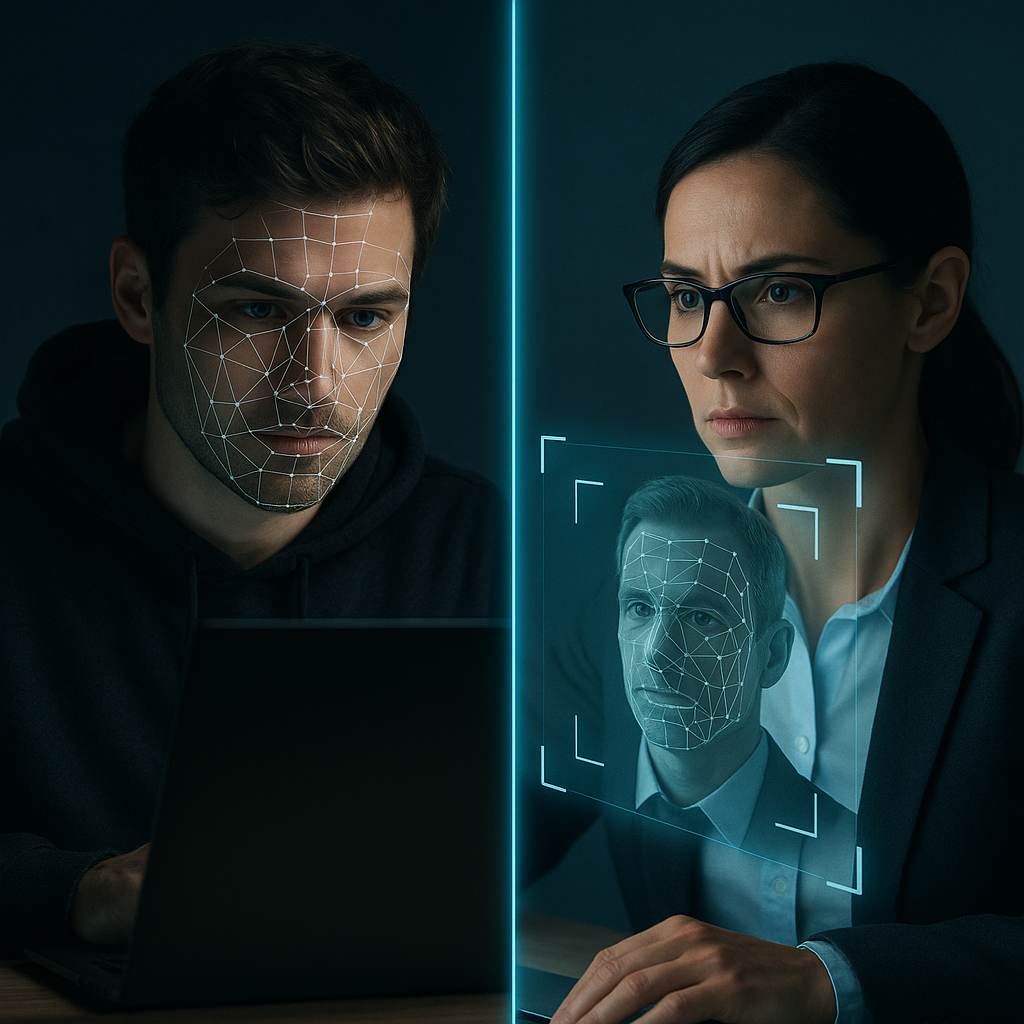
Widely available AI tools can now generate deepfake images from scratch or make highly convincing edits to existing photos in seconds. A fraudster can modify an entire image, altering damage severity, hiding prior loss indicators, or fabricating documentation entirely.
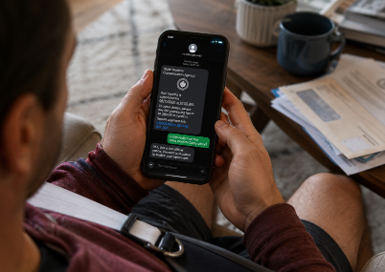
Synthetic Identity Fraud blends real personal information, like a legitimate Social Security number or date of birth, with fabricated details to create a fake person who looks completely real on paper. According to the NICB, it is designed specifically to pass initial verification checks, making it the fastest-growing financial crime in the country. AARP data attributes more than $47 billion in losses to synthetic identity fraud in 2024 alone.
Voice Fraud & Deepfake Audio
Voice fraud is surging in a way that should fundamentally change how call centers and SIU teams treat recorded statements and phone interactions.
According to Pindrop’s 2025 Voice Intelligence & Security Report, which analyzed over 1.2 billion customer calls, there was a 475% increase in synthetic voice attacks specifically targeting insurance companies in 2024. Across all U.S. contact centers, fraud attempts were occurring at a rate of** one every 46 seconds**. Insurance fraud overall rose** 19% year-over-year**, with a fraud rate of approximately 1 in every 4,359 insurance contact center calls.
Deepfake fraud attempts across industries rose more than 1,300% in 2024 alone, jumping from roughly one attempt per month to seven per day, the highest level in six years.
Recorded statements, claimant calls, and EUOs conducted remotely can no longer be treated as inherently reliable. Every piece of audio or visual evidence now requires validation before it informs investigative decisions.
AI in SIU Investigations
The good news is the same technology being weaponized by fraudsters can be deployed by SIU investigators. AI isn’t just a threat. It’s the most powerful investigative tool SIU teams have ever had access to, when applied correctly.
Early Pattern Detection
A landmark study conducted by CLARA Analytics, completed in November 2024, analyzed 2,867 property and casualty insurance claims filed between 2020 and 2024. This study found that machine learning models identified suspicious claims** as soon as two weeks after first notice of loss**, well ahead of standard investigative timelines. The model’s predictions closely matched actual SIU referrals made by human claims professionals, but arrived significantly earlier, giving insurers a crucial head start before costs could escalate.
The study flagged 9% of open claims as having high potential for SIU referral. It also revealed significant geographic variation: California showed the highest overall fraud risk at 17%, followed by Illinois at 11%, while Michigan and Arizona had the highest concentrations of high-potential SIU referrals at 34% and 26%, respectively.
The reason early AI detection works so well is straightforward: it doesn’t depend on predetermined red flags the way conventional detection does. Unsupervised learning systems examine data relationships and anomalies across thousands of variables simultaneously, uncovering previously unknown fraudulent behaviors that human investigators simply aren’t positioned to catch at scale.
Intelligent Triage in SIU Investigations
One of the most immediate wins AI delivers to SIU teams is better triage. Instead of investigators manually reviewing every flagged claim, AI can score risk across the entire claims pipeline and automatically route high-risk files to specialized investigation units while low-risk, clean claims move toward faster resolution.
This matters enormously because SIU capacity is finite. Investigators can focus exclusively on high-probability fraud cases, rather than burning hours on routine claims that show no signs of fraud.
Document Intelligence & Media Forensics
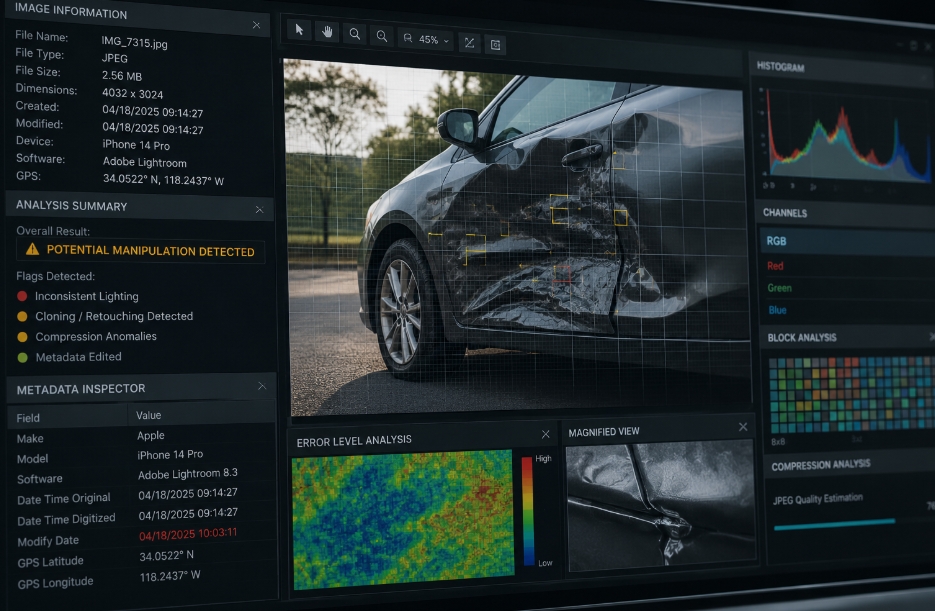
Traditional fraud detection, including rules-based triggers, claim timing, claimant history, adjuster suspicion, does not examine the media evidence itself. If a claim’s data patterns look normal but the supporting photos, video, or documents are fabricated, traditional methods alone won’t catch it.
AI-powered media analysis is the only approach that directly addresses AI-generated evidence. These tools examine submitted photos, videos, and documents for manipulation indicators €” identifying synthetic content, detecting inconsistencies invisible to the human eye, and flagging evidence-fabrication fraud before it results in a payment.
AI Is a Tool for SIU Investigations, Not a Replacement
AI doesn’t deny claims; it flags them for a human investigator. It processes millions of data points, surfaces the highest-risk files, and hands them on to investigators with context, documentation, and a clear evidence trail already assembled.
The result is a fundamental shift in how SIU teams spend their time. Instead of burning hours on manual triage and routine claims that show no signs of fraud, investigators can focus their expertise where it actually matters €” on the complex, high-stakes cases where human judgment, experience, and instinct are irreplaceable.
Deloitte predicts that by implementing AI-driven technologies across the claims life cycle, P&C insurers could save between $80 billion and $160 billion by 2032 in reduced fraudulent claims.
The carriers moving fastest on AI adoption in claims and SIU functions are already reporting measurable results at the board level. The gap between those organizations and those still relying purely on traditional detection methods is widening every quarter.
Best Practices for SIU Investigations
The fraud landscape is only getting more complex: AI-generated claims, deepfake identities, and automated fraud at scale aren’t future threats; they’re already prevalent. The time to adapt isn’t later; it’s now.
Focus on what matters:
-
Train teams to spot AI red flags across language, images, and audio
-
Treat all recorded evidence as unverified until proven otherwise
-
Invest in true media forensics, not just rules-based detection
-
Embed fraud detection throughout the claims lifecycle
-
Stay connected€”shared intelligence is one of the strongest defenses
The next wave of fraud is already forming. The organizations that prepare today will be the ones that stay ahead tomorrow.
Want to work with a team that’s ahead of these trends? Let’s talk.
Check out our sources:
CLARA Analytics. “CLARA Analytics Study Reveals AI as Early Warning System for Insurance Fraud.” Business Wire, 21 May 2025, www.businesswire.com/news/home/20250521573900/en/CLARA-Analytics-Study-Reveals-AI-as-Early-Warning-System-for-Insurance-Fraud.
Coalition Against Insurance Fraud. The Impact of Insurance Fraud on the U.S. Economy. Coalition Against Insurance Fraud / Colorado State University Global White Collar Crime Task Force, 2022, insurancefraud.org/wp-content/uploads/The-Impact-of-Insurance-Fraud-on-the-U.S.-Economy-Report-2022-8.26.2022.pdf.
Coalition Against Insurance Fraud. “Insurance Fraud Costs the U.S. $308.6 Billion Annually.” InsuranceFraud.org, www.insurancefraud.org.
Deloitte Center for Financial Services. “Using AI to Fight Insurance Fraud.” Deloitte Insights, 2025, www.deloitte.com/us/en/insights/industry/financial-services/financial-services-industry-predictions/2025/ai-to-fight-insurance-fraud.html.
Deloitte. “Deloitte Releases 2025 Financial Services Industry Predictions Report.” Deloitte Press Room, 24 Apr. 2025, www.deloitte.com/us/en/about/press-room/deloitte-releases-2025-financial-services-industry-predictions-report.html.
Glawe, David J., et al. “Identity Crime Becomes Foundation for Ongoing Schemes Targeting Life Insurance, Healthcare, Vehicle Financing and Cargo.” National Insurance Crime Bureau / PR Newswire, 2 Sept. 2025, www.prnewswire.com/news-releases/identity-crime-becomes-foundation-for-ongoing-schemes-targeting-life-insurance-healthcare-vehicle-financing-and-cargo-302542211.html.
National Insurance Crime Bureau. “NICB Projects 49% Rise in Insurance Fraud Linked to Identity Theft in 2025.” NICB.org / PR Newswire, 2 Sept. 2025, www.nicb.org/news/news-releases/nicb-projects-49-rise-insurance-fraud-linked-identity-theft-2025.
Pindrop. 2025 Voice Intelligence & Security Report. Pindrop, 2025, www.pindrop.com/research/report/voice-intelligence-security-report.
Pindrop. “Pindrop’s 2025 Voice Intelligence & Security Report Reveals +1,300% Surge in Deepfake Fraud.” PR Newswire, 12 June 2025, www.prnewswire.com/news-releases/pindrops-2025-voice-intelligence€“security-report-reveals-1-300-surge-in-deepfake-fraud-302479482.html.
Shift Technology. “2025: The Year U.S. P&C Insurers Must Modernize Fraud Detection.” Shift Technology, 2025, www.shift-technology.com/resources/reports-and-insights/modernize-fraud-detection.