The Three Faces of Psychosocial Risk in Workers' Compensation Claims
This blog explores how psychosocial factors shape recovery in workers' comp claims.
By Carla Rodriguez | Jul 31, 2026 | 3 min. read

What you will find below:
- The Three Types of Psychosocial Risk Factors
- How to Recognize Yellow Flags
- Strategies for Managing Psychosocial Risk
Every adjuster has worked a claim where the medical file looks fine on paper, but the claim itself doesn’t move.
Treatment is happening, the diagnosis is clear, and yet return-to-work stalls without an obvious reason. More often than not, the missing piece isn’t physical at all but it might be psychosocial.
Psychosocial factors are the mental, emotional, and social conditions that shape how someone heals: fear, expectations about recovery, workplace relationships, and life circumstances outside the claim itself.
Clinically, they’re often called “yellow flags,” they are not evidence of fraud or misrepresentation, but signals that recovery may not follow a standard timeline. Understanding the three categories these factors fall into gives claims professionals a sharper lens for reading claims that don’t behave the way the diagnosis suggests they should.
What This Looks Like in a Claim
Psychosocial factors rarely announce themselves. No provider note is going to say “psychosocial factors present.” What shows up instead is a claim that just feels stuck: progress stalling without a clear medical explanation, appointments getting missed, return-to-work conversations going in circles, or a claimant describing pain that seems out of step with the objective findings.
None of that is a red flag on its own. It’s a prompt to ask a better question not a reason to think “is this person lying?” but “what’s actually driving this behavior?” That question is where the three categories become useful.
1. Psychological Factors
This category covers what’s happening in a claimant’s mind: fear of re-injury, catastrophizing, depression, anxiety, and perhaps most consequential poor expectations about recovery.
Catastrophizing, in particular, will look familiar to anyone who’s ever fallen down a symptom-checker rabbit hole online and convinced themselves a simple headache is something dire and uncurable (we have WebMD to thank for that.) The brain has a well-worn habit of assuming the worst-case scenario is the most likely one, and for an injured worker, that habit can shape the entire recovery.
A 2024 study from the Workers Compensation Research Institute (WCRI) found that injured workers with high levels of psychosocial risk factors saw functional improvement scores roughly 40 percent smaller than workers with the same diagnoses but without those risk factors (Thumula et al.).
Same injury, same treatment plan, very different trajectories.
That belief effect runs both directions. Just as confidence in a positive outcome can support healing, the reverse, known as the nocebo effect, shows that negative information delivered during a clinical encounter can itself contribute to worse outcomes. It’s the medical version of being told not to think about a pink elephant: once someone hears “this might not heal well,” that idea is remarkably hard to un-hear.
In practice, this means the language used by providers, adjusters, and employers in the early days of a claim isn’t neutral it becomes part of the clinical picture.
It’s also worth distinguishing psychological drivers from financial ones. Factitious disorders for example - exaggerating or fabricating symptoms for attention or identity rather than money is rare, but it’s a useful reminder that not every complicated claim is a fraud case. Motivation is wider than dollars.
2. Workplace-Related Factors
The second category lives in the relationship between the claimant and their job: dissatisfaction, distrust of an employer, or a sense that a supervisor doesn’t support them. None of this shows up in a medical record, but it shows up clearly in how someone engages with the return-to-work process. Think of the dread in Groundhog Day every time Phil Connors wakes up to the same alarm and the same unchanged day waiting for him, that’s roughly what RTW can feel like for a worker heading back into an environment that hasn’t gotten any better since they left it.
A worker who resists RTW because they dread the environment they’re heading back into is a fundamentally different claim than one where the person is simply not ready, physically, to return even though both can look identical from the outside.
3. Personal and Contextual Factors
The third category sits outside the workplace entirely: financial strain, instability at home, a thin support system, or pre-existing mental health conditions. It looks a bit like a game of Jenga - pull one piece out of someone’s life, and the whole structure gets less stable, even if nothing else about the tower changed.
These pressures can slow or derail recovery even when the medical picture looks straightforward, simply because recovery doesn’t happen in a vacuum but rather as a part of someone’s life.
Why These Claims Are Harder to Read
With a purely physical injury, cause and effect are relatively straightforward: there’s imaging, a diagnosis, and a recovery timeline you can measure progress against. Once range of motion improves or strength returns, the file moves.
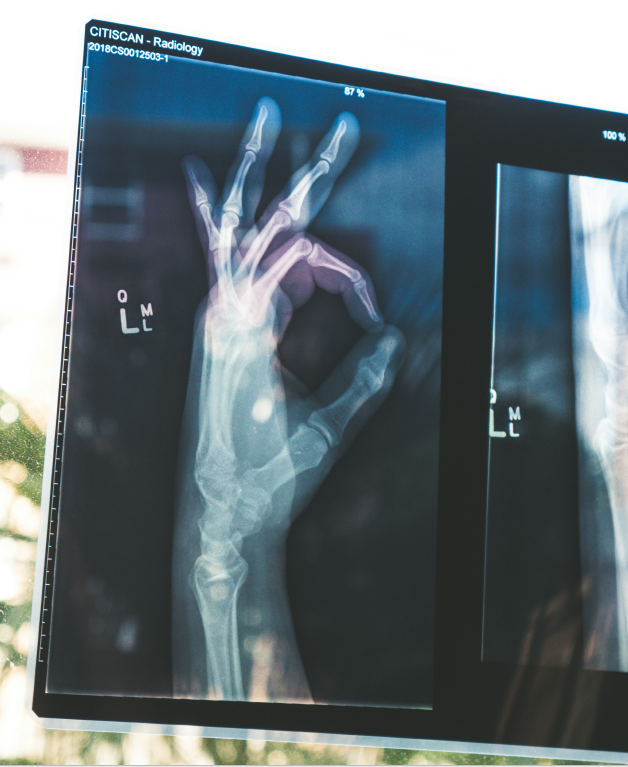
Psychosocial recovery doesn’t offer that same clarity. There’s no X-ray for fear. You can’t scan for anxiety, and there’s no standard benchmark for “back to normal” confidence.
Instead, progress has to be read and deciphered through behavior, self-reporting, and patterns. The same outward behavior can point to very different underlying realities. What looks like someone dragging their feet on RTW might be genuine fear of an unsafe-feeling environment, or it might be a deliberate delay. Reading that difference correctly is exactly why the three categories matter.
Why the Distinction Matters
Recognizing which category or combination is in play changes how a claim should be managed. Most claimants showing these patterns aren’t doing anything deliberate; their experience of the injury is simply more complicated than the diagnosis suggests.
According to research done on the Return to Work Readiness, a smaller number show symptom amplification, where reported limitations exceed what the objective findings would predict, often because pain perception itself is heightened by psychological distress, not because anyone is being untruthful.
A claimant experiencing symptom amplification isn’t performing; their brain is genuinely processing pain as worse than the objective findings suggest, similar to a bad dream that feels completely real while it’s happening.
Intentional misrepresentation exists too, but it’s the exception, not the rule. The workers’-comp equivalent of The Boy Who Cried Wolf, memorable precisely because it’s rare enough to stand out. That claim calls for documentation and a different process altogether. Treating every complicated claim the same way creates friction on the cases that didn’t need it and can make legitimate claims harder to close.
What Can You Do With This
Knowing the category of a stuck claim helps point towards next steps:
- Psychological drivers - responds best to relational moves: clear, reassuring communication about what recovery actually looks like, and reducing fear early.
- Workplace-related drivers - understanding what the worker is actually returning to, and whether a modified-duty plan addresses the real source of resistance, not just the physical restrictions.
- Personal and contextual drivers - naming them changes expectations. A claim slowed by financial strain or a shaky support system isn’t going to respond to the same timeline as one without those pressures, and case management plans should account for it.
- Symptom amplification and misrepresentation - The former calls for continued good-faith management with attention to pain science; the latter calls for documentation and, where warranted, referral to SIU. Sorting the two accurately is what keeps the response proportionate.
Recognizing psychosocial risk factors is a skill claims professionals sharpen over time, not something that shows up cleanly in a single file.
Want to learn more? Join our continuing education webinar, Psychosocial Risk: The Next Wave of Workers’ Comp Complexity where we dig deeper into exactly how to spot yellow flags early, how to respond differently across the three claim scenarios, and how to bring this knowledge into your everyday work.
Register for our upcoming webinar here.
Sources
- Colloca, Luana, and Damien Finniss. “Nocebo Effects, Patient-Clinician Communication, and Therapeutic Outcomes.” JAMA, vol. 307, no. 6, 2012, pp. 567–568.
- Thumula, Vennela, et al. Importance of Psychosocial Factors for Physical Therapy Outcomes. Workers Compensation Research Institute, 2024.