Fraud Detection Without Exposure in Claims Investigations
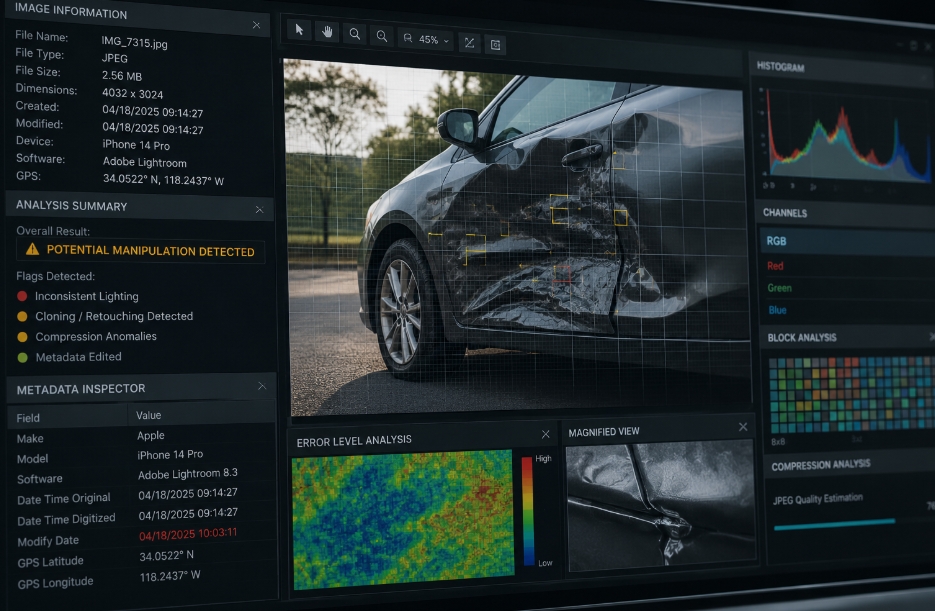
Fraud detection is a critical part of claims management, but not every inconsistency points to fraud. This blog explores why conflicting details, delayed treatment, and documentation gaps are common in legitimate claims and why context matters before conclusions are made. It also breaks down the risks of over-identifying fraud in an increasingly technology-driven environment.
By Caroline Caranante | Jun 12, 2026 | 3 min. read

What you will find below:
- Reasons for Inconsistencies and Conflicting Details in Claims
- How Red Flags Should Guide Investigations, Not Drive Conclusions
- Why Documentation and Defensible Decision-Making Matter in Fraud Detection
Bad faith verdicts rarely start with a carrier paying a fraudulent claim. More often, they start with a carrier denying a legitimate one, and a claim file that cannot clearly explain why.
As fraud detection tools become more sophisticated and SIU referral volumes increase, there is growing pressure to identify fraud earlier and more consistently. But the risk of over-identifying fraud is just as real as the risk of missing it.
The challenge is not simply catching more fraud. It is determining whether suspicious details actually point to fraud or whether there is another explanation. And that distinction is often harder than it seems because many of the things that make a claim appear questionable happen in legitimate claims every day.
Why Inconsistencies Can be Common in Claims
Conflicting details show up in legitimate claims all the time, and usually for reasons that have nothing to do with dishonesty.
One of the most common causes is how people remember stressful events. Research on traumatic memory consistently shows that people often recall stressful experiences in fragmented, incomplete, or even contradictory ways. That does not automatically mean someone is being deceptive; it reflects how memory under stress works.
Delays in treatment create another common source of confusion. Claimants dealing with financial strain, limited access to care, or simply hoping an injury improves on its own often wait before seeing a physician. When treatment records finally appear in the file, the timeline may look inconsistent or raise questions, especially when viewed without the context behind the delay.
Multiple people involved in the same event can also create differences in the story. A workers’ compensation claim involving an injured worker, supervisor, witnesses, and an emergency room physician will rarely result in identical accounts of what happened. Each person sees and remembers events differently. Expecting perfect consistency creates a standard that even honest claimants often cannot meet.
Documentation issues only add to the challenge. Incomplete police reports, difficult-to-read medical records, and missing paperwork are frustratingly common. But those gaps are more often caused by overwhelmed providers, delayed record requests, or disorganized documentation than intentional concealment.
Red Flags Should Start the Investigation, Not End It
A red flag alone is rarely enough to prove fraud. The bigger risk is treating a suspicious detail as a conclusion instead of a starting point.
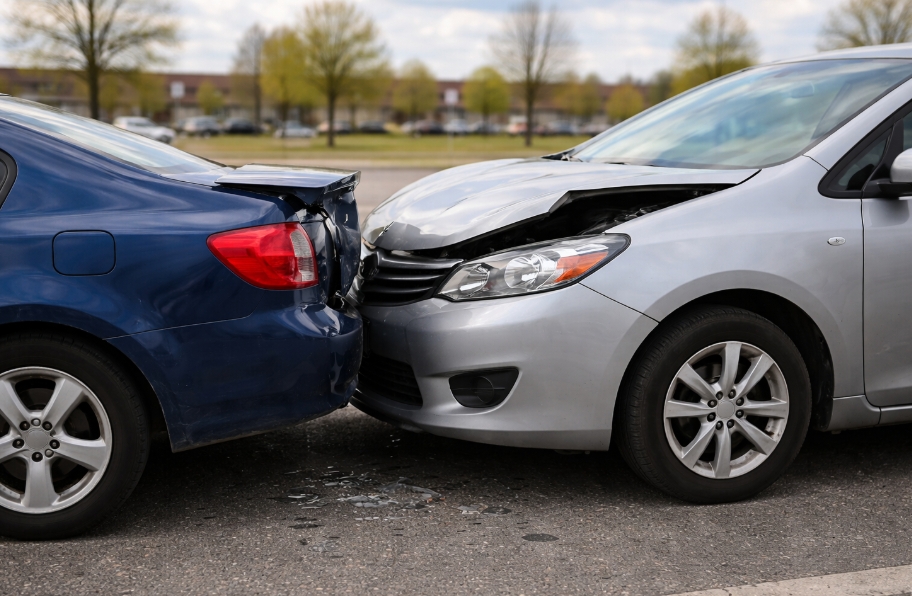
A claimant with a soft tissue injury, delayed treatment, no witness, and a prior claim from four years ago may look suspicious at first glance. But those same characteristics appear in thousands of legitimate claims every year.
If a file moves toward denial because those details felt questionable, and there is no documentation showing how the concern was investigated, the issue is no longer fraud detection. It becomes exposure.
The difference between a defensible file and a vulnerable one is not whether suspicion existed. It is whether the investigation and reasoning behind the decision are visible.
A claimant connected to a provider network generating SIU referrals elsewhere, involved at an intersection with a history of staged collisions, and represented by an attorney appearing in multiple suspicious claims€”that is a pattern worth escalating. A file that documents that reasoning can support the decision.
Technology Improves Triage But It Creates New Risks
The move toward AI-assisted fraud detection is accelerating across the industry.
A November 2024 study by CLARA Analytics, which analyzed nearly 2,900 property and casualty claims, found that machine learning models could identify claims warranting SIU referral as early as two weeks after first notice of loss€”earlier than traditional workflows€”and with results that closely matched decisions ultimately made by claims professionals.
An AI model flagging a claim should trigger additional review, not serve as the reason for the outcome. One of the biggest risks organizations underestimate is not that the technology gets it wrong. It is creating a file where technology influenced the decision and no one documented why the claims professional agreed.
Courts do not accept “the model flagged it” as a coverage rationale. Human judgment in claims investigation is still required.
The File That Explains Itself Is the File That Holds Up
Every difficult claim eventually comes back to the same three questions.
- ** Can the inconsistency be explained by context?**
Before treating a discrepancy as suspicious, evaluate whether stress, delayed treatment, multiple perspectives, or documentation gaps explain what happened. If those possibilities were considered, document that.
- ** Is there a pattern or just an isolated issue?**
One indicator may justify attention. Multiple connected indicators, such as provider relationships, geographic trends, claim history, and attorney involvement, may justify escalation. Responding proportionally is what separates disciplined investigation from the appearance of bad faith.
- ** Does the file show the reasoning€”not just the outcome?**
Every decision to pay, deny, or refer should connect back to documented evidence and recorded rationale. A file that only shows the result cannot defend how that result was reached.
Final Thoughts
The Coalition Against Insurance Fraud estimates insurance fraud costs the industry $308.6 billion annually, and those losses are worth taking seriously.
But effective fraud detection is not about generating more referrals or denying more claims. It is about making decisions that can be supported.
The claims professionals who consistently hold up under scrutiny are the ones who can explain what raised concern, what steps were taken to investigate it, what evidence was found, and how the final decision was reached.
That standard is not created by individual judgment alone. It is built into referral thresholds, documentation practices, SIU escalation criteria, and adjuster training.
When a file clearly documents what was found, what was considered, and why the outcome was justified, it protects the carrier, treats legitimate claimants fairly, and makes actual fraud easier to identify and prove.
Looking to strengthen claims decisions with investigations and documentation that stand up? Connect with our team today.
Check out our sources:
Coalition Against Insurance Fraud. The Impact of Insurance Fraud on the U.S. Economy. Colorado State University Global White Collar Crime Research Task Force, 2022, https://insurancefraud.org/wp-content/uploads/The-Impact-of-Insurance-Fraud-on-the-U.S.-Economy-Report-2022-8.26.2022.pdf.
Dhakal, Pragatee. “CLARA Analytics Study Reveals AI as Early Warning System for Insurance Fraud.” Business Wire, 21 May 2025, https://www.businesswire.com/news/home/20250521573900/en/CLARA-Analytics-Study-Reveals-AI-as-Early-Warning-System-for-Insurance-Fraud.
National Association of Insurance Commissioners. “Insurance Fraud.” NAIC, National Association of Insurance Commissioners, https://content.naic.org/insurance-topics/insurance-fraud.
Strange, Deryn, and Melanie K. T. Takarangi. “Memory Distortion for Traumatic Events: The Role of Mental Imagery.” Frontiers in Psychiatry, vol. 6, article 27, 23 Feb. 2015, https://pmc.ncbi.nlm.nih.gov/articles/PMC4337233/.
Insurance Information Institute. “Facts + Statistics: Fraud.” III, Insurance Information Institute, https://www.iii.org/fact-statistic/facts-and-statistics-insurance-fraud.