Hurricane Season Fraud Risks for Claims Teams
Hurricane season puts significant pressure on claims organizations as volumes spike and timelines compress. These conditions create openings that organized fraud networks are prepared to exploit. This blog breaks down how post-disaster fraud typically enters the claims process and the difference between opportunistic and coordinated schemes. It also looks at how generative AI is changing documentation fraud and increasing detection challenges. Finally, it highlights the early signals claims teams should watch for during peak storm season.
By Caroline Caranante | Jun 18, 2026 | 3 min. read
What you will find below:
- Why Natural Disasters Create Opportunity for Fraud
- Warning Signs of Post-Disaster Fraud
- How AI is Creating New Challenges
- Steps Claims Teams Can Take to Prepare for Hurricane Season
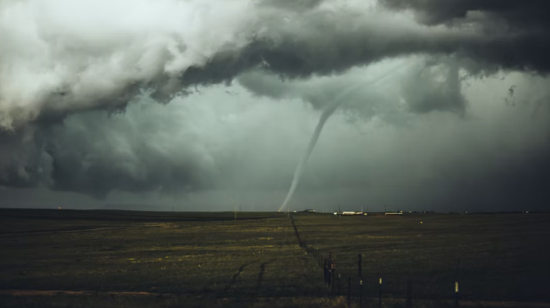
In September and October 2024, Hurricanes Helene and Milton made landfall on Florida’s Gulf Coast just two weeks apart, generating more than 436,000 claims across Florida alone, which is approximately $5.2 billion in insurer payouts.
Before debris removal was fully underway, Florida had deployed 130 fraud detectives to affected areas. An undercover investigation had already produced nearly 40 arrests.
Fraud activity didn’t begin after the storm; it moved in alongside it.
Why Natural Disasters Create Opportunity for Fraud
Post-disaster claims environments create ideal conditions for fraud:
-
Claim volume increases quickly
-
Damage is still being assessed
-
Documentation is often limited
At the same time, pressure builds to move claims forward.
Organized fraud networks prepare for exactly that. They monitor storm activity and position resources ahead of landfall. By the time inspections begin, some have already contacted policyholders, secured assignment-of-benefits agreements, and started introducing inflated estimates into the process.
The tactics are consistent:
-
Soliciting homeowners before carrier inspections
-
Presenting pre-existing damage as storm-related
-
Expanding legitimate loss into broader repair scopes
-
Filing duplicate claims across jurisdictions.
NICB reported a 38% increase in contractor fraud reports between 2023 and 2025. The volume of disasters explains part of that. The sophistication of the networks explains the rest.
Opportunistic vs. Organized Fraud
Not all post-disaster fraud looks the same, and the distinction matters for how claims teams respond.
Opportunistic fraud is often smaller in scale and easier to recognize. Consider an unlicensed contractor collecting deposits and disappearing before work is completed.
Organized fraud networks operate differently. These are coordinated operations that pre-position across multiple zip codes before a storm makes landfall, deploy teams to solicit policyholders immediately after impact, and submit claims with documentation professional enough to pass initial review.
They exploit assignment-of-benefits (AOB) agreements, which are contracts that transfer insurance claim rights directly from the policyholder to the contractor, to remove the insurer from the conversation entirely. Once an AOB is signed, the contractor controls the claim.
The detection approach for each is different. Opportunistic fraud often surfaces through policyholder complaints. Organized fraud surfaces through patterns, including:
-
Repeated contractors across unrelated files
-
Similar repair language
-
Overlapping documentation
-
Claim timing that doesn’t align with inspection schedules
How AI is Changing Documentation Fraud
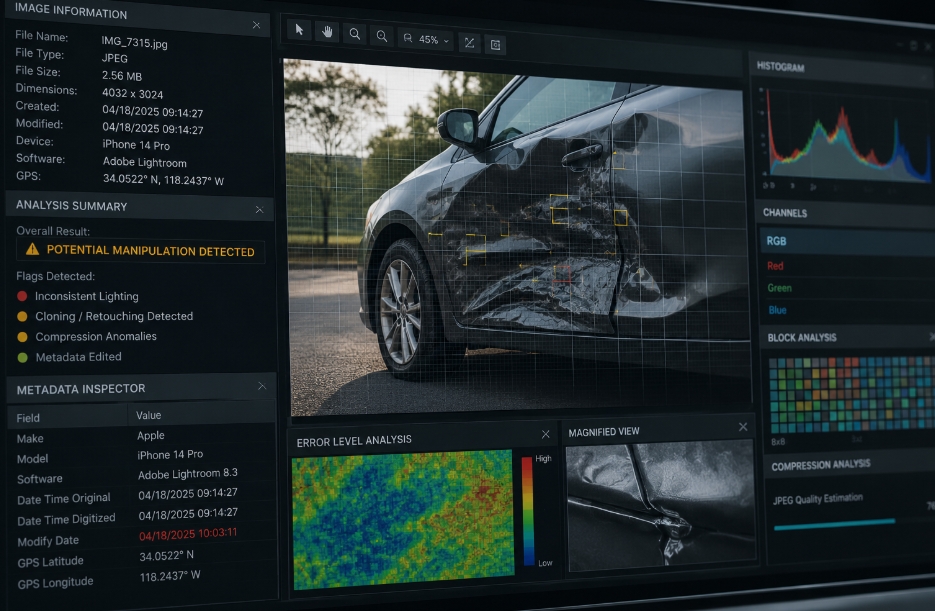
Fabricated damage photos, manipulated imagery, and altered estimates are an accelerating threat that many organizations aren’t equipped to catch.
A 2026 joint report from the ACFE and SAS found only 7% of anti-fraud professionals considered their organizations more than moderately prepared to detect AI-generated fraud. That gap is where fraud is currently operating.
For claims professionals, this means the usual markers of legitimacy, such as photos, contractor documentation, and repair scopes, carry less evidentiary weight than they did two years ago. Today, it is essential for authentication to be a part of the workflow.
Preparing for the Next Storm
Claims professionals are often the first to notice when details don’t add up. This could look like repeated contractors across unrelated claims, repair scopes that don’t align with the reported damage, or documentation that arrives unusually quickly or appears unusually polished.
Those observations only matter if teams have a clear process to escalate concerns before payments are made. Post-disaster fraud isn’t something that appears later in the investigation process; it starts entering the workflow from the first notice of loss.
Claims organizations that prepare for that reality with clear escalation paths, shared visibility, and early coordination can reduce the opportunity for fraud before it spreads.
After Helene and Milton, the question isn’t whether fraud entered the pipeline. It’s whether the organization was positioned to recognize it in time.
Want to learn more before hurricane season? Continue the conversation with our upcoming CE on natural disaster fraud.
Check out our sources:
Association of Certified Fraud Examiners. “Deepfake Fraud Surges €“ and Only 7% of Organizations Are Firmly Ready.” ACFE Newsroom, 25 Mar. 2026, www.acfe.com/about-the-acfe/newsroom-for-media/press-releases/press-release-detail?s=2026-anti-fraud-technology-benchmarking-report-pr.
Florida Office of Insurance Regulation. “Hurricane Helene and Milton Claims Data.” Florida Realtors, 20 Nov. 2024, www.floridarealtors.org/news-media/news-articles/2024/11/hurricane-milton-helene-insured-losses-top-5b.
Insurance Business. “Hurricane Helene, Milton Claims in Florida €“ How Much Has Been Paid Out?” Insurance Business Magazine, 26 Nov. 2024, www.insurancebusinessmag.com/us/news/claims/hurricane-helene-milton-claims-in-florida€“how-much-has-been-paid-out-515527.aspx.
National Insurance Crime Bureau. “NICB Warns Americans Contractor Fraud Continues to Rise Nationwide.” NICB, 19 May 2026, www.nicb.org/news/news-releases/nicb-warns-americans-contractor-fraud-continues-rise-nationwide.