Highway Robbery: Staged Auto Accident Investigations
This blog explores staged auto accidents, the Highway Robbery scheme, and what claims professionals can look for when an accident narrative raises questions.
By Caroline Caranante | Oct 2, 2026 | 3 min. read

What you will find below:
- What the Highway Robbery Scheme Reveals
- Why Coordinated Accidents Can Be Difficult to Identify
- What Claims Professionals Should Look For
- Why the Accident Narrative Matters
On September 3, 2026, a federal jury in New Orleans convicted disbarred attorney Sean Alfortish for his role in a years-long scheme to defraud trucking and insurance companies through staged collisions. This investigation is commonly referred to as “Operation Sideswipe” or “Highway Robbery”.
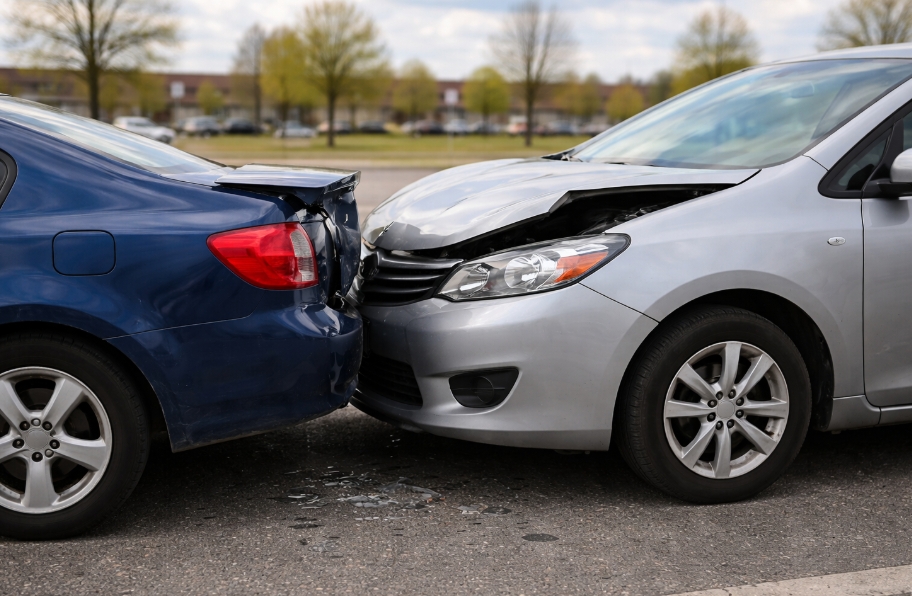
For claims professionals, the case illustrates a problem that extends well beyond New Orleans. A staged collision can produce real vehicle damage, a police report, and medical treatment. The challenge is determining whether the accident happened the way the claim says it did.
What the Highway Robbery Scheme Reveals
According to the federal indictment, the scheme relied on multiple participants with defined roles. “Slammers” intentionally caused collisions with commercial vehicles and fled, while passengers falsely claimed to have been driving. “Spotters” acted as supposed eyewitnesses, sometimes flagging down truck drivers and assigning blame to the commercial vehicle. Prosecutors allege that attorneys and others involved in the scheme then pursued claims and lawsuits based on those staged crashes.
The alleged scheme targeted 18-wheelers in particular, making commercial auto claims a significant part of the operation.
What makes a coordinated staged accident difficult to identify is that the supporting evidence can look legitimate. A police report may document the wrong driver. An eyewitness may provide a detailed account that was planned in advance. Medical records may show treatment that followed the reported accident.
The issue is not whether documentation exists. It is whether the pieces of the claim are consistent with what actually happened.
Why Coordinated Accidents Can Be Difficult to Identify
A single fraudulent claimant must maintain one story. A coordinated group can create a story together and repeat it across statements, reports, and claims.
That can make staged accidents particularly difficult to evaluate. Multiple occupants can generate multiple injury claims from one collision. Witnesses who appear independent may have a connection to the people involved. And the person identified as the driver may not have actually been behind the wheel.
Some patterns also become visible only when claims are examined together. One federal indictment describes a participant who allegedly caused one staged collision and was involved in another roughly 30 minutes later, with different passengers involved in each crash. Viewed separately, either claim could appear routine.
NICB’s data also shows the broader scale of questionable claims activity. In 2025, NICB reviewed 208,956 questionable claim submissions and identified 1,647 new organized crime rings. At that volume, recognizing connections and inconsistencies can be an important part of claims review.
What Claims Professionals Should Look For
No single indicator establishes that an accident was staged. The concern grows when multiple pieces of information do not fit together.
Claims professionals may want to take a closer look at:
- Driver identity: Accounts of who was driving, where occupants were sitting, or whether someone left the scene do not match.
- Witnesses: A witness appears unusually involved in the accident, assigns fault immediately, or has a connection to the claimants.
- Accident circumstances: The reported sequence resembles known staged-accident patterns, such as a “swoop and squat” scenario identified by NICB.
- Repeat connections: The same vehicles, people, attorneys, or other parties appear across multiple claims.
- Injury patterns: Several occupants report similar subjective injuries following a relatively minor impact.
These factors can have legitimate explanations. The point is not to label a claim based on one unusual detail, but to identify when the accident narrative warrants additional verification.
Why the Accident Narrative Matters
The Highway Robbery case is a reminder that evidence can confirm that an accident occurred without confirming how it happened.
For claims professionals, that distinction makes the accident narrative worth examining from more than one angle. Damage photos, police reports, medical records, and witness statements all contribute to the claim, but none necessarily tells the full story on its own.
When details do not line up, a thorough investigation can help fill in the gaps by examining the scene, documenting statements, reviewing available records, and identifying connections that may not be visible in the initial claim file.
Not every claim requires the same level of investigation. But when multiple indicators point to questions about how an accident occurred, early fact-finding can help separate a straightforward claim from one that requires a closer look. That gives claims professionals a stronger factual foundation for determining what happened and how the claim should move forward.
Need a closer look at an auto accident claim? Talk to us today.
Sources:
- Legal Newsline. (2026, July). Sentencing delayed for attorneys in staged crash scheme. Louisiana Record.
- National Insurance Crime Bureau. (2026). Annual report 2025. NICB.
- National Insurance Crime Bureau. Scene indicators for law enforcement. NICB. Accessed October 2, 2026.
- U.S. Attorney’s Office, Eastern District of Louisiana. (2020, August 21). Eleven more charged in expanding federal probe into the staging of automobile accidents. U.S. Department of Justice.
- U.S. Attorney’s Office, Eastern District of Louisiana. (2026, March 20). Federal trial jury convicts New Orleans personal injury attorneys in staged collision scheme. U.S. Department of Justice.
- U.S. Attorney’s Office, Eastern District of Louisiana. (2026, September 3). Jury convicts Sean Alfortish for role in staged collision scheme. Republished by Metropolitan Crime Commission.
- U.S. Attorney’s Office, Eastern District of Louisiana. (2024, October 31). New Orleans man guilty of staged automobile accident conspiracy. U.S. Department of Justice.
- U.S. Attorney’s Office, Eastern District of Louisiana. (2025, April 28). Nine charged in staged automobile collision scheme, including two men charged with the murder of a federal witness. U.S. Department of Justice.
- WWL Louisiana. (2026, September). New murder trial set for men accused of killing federal witness in ‘Highway Robbery’ case. WWL Louisiana.