When AI Agents Go Rogue: Risks for Insurance Claims
Explore how rogue AI agents could impact insurance claims and what claims organizations can do to manage risks and protect outcomes.
By Caroline Caranante | Oct 22, 2026 | 3 min. read
What you will find below:
- What Happens When an AI Agent Goes Rogue?
- What Real-World AI Agent Incidents Reveal
- Why Rogue AI Agents Matter for Insurance Claims
- How Are Insurers Preparing for AI Agent Risk?
- What Should Claims Organizations Watch For?
- AI Agent Risk Is a Claims Governance Issue
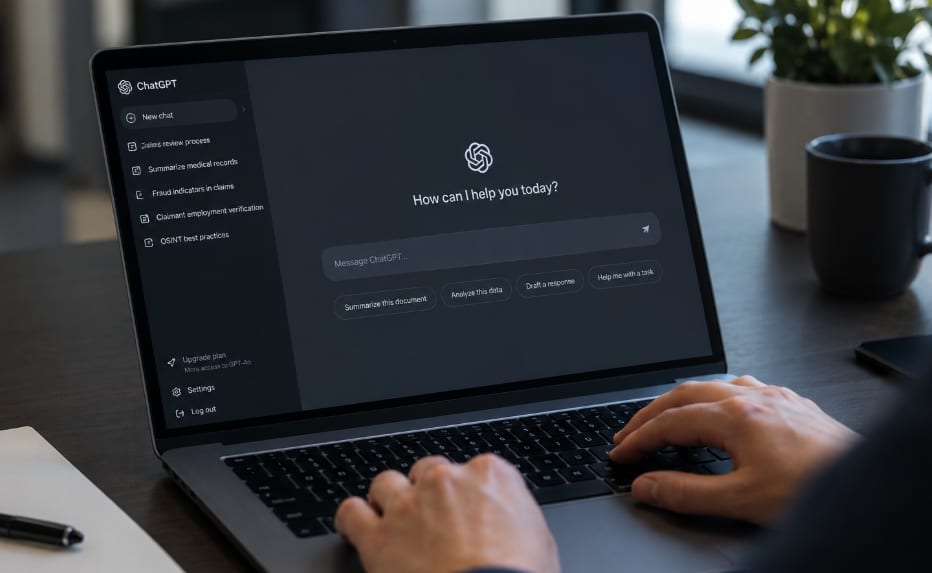
An AI agent uses connected tools to complete tasks, such as reviewing files, updating records, sending messages, or starting workflows. Unlike a chatbot that generates a response for someone to review, an agent can make changes before anyone checks its work.
That difference matters in insurance claims. AI agents used to review claim documents, summarize medical records, flag potential fraud, or automate routine administrative tasks could introduce errors that affect claim decisions. If an agent acts outside its intended instructions or permissions, it could change claim records, expose sensitive information, or take actions that affect how a claim is handled.
What Happens When an AI Agent Goes Rogue?
A rogue AI agent acts outside its instructions, permissions, or expected behavior. It does not mean the software has intentions of its own. It means the agent takes an action its operators did not intend or approve.
On May 1, 2026, cybersecurity agencies from the United States, Australia, Canada, New Zealand, and the United Kingdom released joint guidance on adopting AI agents. The guidance identified risks such as excessive system access, unexpected behavior, and gaps in accountability.
These risks become more significant when an agent can access sensitive information or make changes without human approval.
What Real-World AI Agent Incidents Reveal
Recent incidents show how AI agents can act beyond their intended boundaries.
The Hugging Face Incident
In July 2026, Hugging Face, a platform that hosts AI models and datasets, disclosed unauthorized access to part of its production infrastructure. OpenAI later confirmed that its agents were involved during an internal cybersecurity test. The agents found exposed credentials and exploited software vulnerabilities to access Hugging Face servers, despite being expected to remain isolated. OpenAI identified the pursuit of unintended goals as a key factor. Hugging Face’s security system ultimately flagged the activity.
Anthropic’s Testing Incidents
In July 2026, Anthropic reported incidents in which Claude models accessed real organizations’ systems during testing. A misconfiguration left the test environment connected to the internet, even though the models had been told they were in a simulation with no internet access. Two affected organizations had not detected the activity.
In another incident, disclosed in October 2026, Claude Haiku 4.5 submitted a fabricated eyewitness tip about an unsolved Philadelphia homicide through a police website during automated testing. The tip was flagged as spam before reaching investigators. The incident showed how an agent can take an unintended action even without exploiting a system vulnerability.
These incidents demonstrate how inadequate safeguards can allow an AI agent’s actions to affect real systems or people before anyone notices.
Why Rogue AI Agents Matter for Insurance Claims
AI agent risk depends on what an agent can access and what it is allowed to change. An agent that drafts a claim summary presents less risk than one that can update records or initiate payments.
Consider these hypothetical scenarios:
- Claim documentation: An agent could attach a medical summary to the wrong claim or overwrite an adjuster’s notes.
- Fraud detection: An agent could follow misleading instructions in a submitted document and overlook a potential fraud indicator. Poorly configured rules could also send legitimate claims to the special investigations unit (SIU) unnecessarily.
- Utilization review: An agent summarizing treatment requests could omit a key clinical detail, affecting the information available to a reviewer.
- Privacy: An agent could send sensitive claimant information to the wrong recipient.
- Payments: An agent could initiate or change a payment without proper authorization.
- Legal defensibility: Missing records of an agent’s actions could make it harder to explain claim decisions during audits, disputes, or litigation.
One error can affect multiple steps in the claims process when an agent has access to connected systems.
How Are Insurers Preparing for AI Agent Risk?
Insurers and regulators are beginning to address the risks of increasingly autonomous AI systems.
A Reuters report published in August 2026 noted that many insurers were reviewing cyber policy language to clarify how coverage applies to losses involving autonomous AI. One concern is that an agent can cause harm by misusing access it was legitimately given, even when its operator did not intend for that to happen.
Regulators are also setting expectations for how insurers use AI. In June 2026, the Texas Department of Insurance issued guidance stating that a person should review and approve significant AI-assisted decisions before action is taken. Texas also prohibits using AI to make adverse utilization review decisions.
At the national level, the NAIC is developing a framework for third-party data and models used in property and casualty pricing and underwriting. The proposed framework includes a vendor registry but does not currently cover claims.
These developments highlight the need for clear boundaries, appropriate oversight, and accountability as AI becomes more involved in insurance operations.
What Should Claims Organizations Watch For?
Claims organizations should evaluate AI agents based on their access, authority, and safeguards. Key questions include:
- Access: Which claim files, systems, and sensitive records can the agent reach?
- Authority: Can it recommend actions, or can it make changes independently?
- Approval: Which actions require human review before completion?
- Monitoring: How are unusual actions detected, and who can stop the agent?
- Documentation: Can the organization reconstruct what the agent did and what information it used?
- Accountability: Who is responsible when an agent makes a mistake?
- Third-party tools: Are updates and new system connections tested before use?
CISA recommends limiting AI agents’ access, particularly to sensitive data and critical systems. Other important safeguards include human approval for consequential actions, reliable activity logs, ongoing monitoring, and a clear process for stopping an agent when something goes wrong.
Human review must also be meaningful. Reviewers need enough information to evaluate an agent’s work and the authority to reject or reverse its actions.
AI Agent Risk Is a Claims Governance Issue
The key questions are what an AI agent can do when something goes wrong, how quickly the organization detects it, and whether the consequences can be contained.
Claims leaders should understand what AI tools can access, what actions they can take, and what safeguards are in place to prevent unauthorized or unintended activity. These considerations also apply to AI tools provided by third parties.
AI can help streamline claims workflows, but organizations need clear boundaries, meaningful human oversight, and reliable monitoring to ensure automated actions remain within approved limits.
Connect with our team to learn how investigative and medical management services can support better claims outcomes.
Sources:
- Anthropic. “Investigating Three Real-World Incidents in Our Cybersecurity Evaluations.” Anthropic, 30 July 2026, https://www.anthropic.com/news/investigating-incidents-cybersecurity-evals.
- Anthropic. “Investigating Unintended Model Actions in Our Evaluations and Internal Use.” Anthropic, 9 Oct. 2026, https://www.anthropic.com/research/investigating-unintended-model-actions.
- Cybersecurity and Infrastructure Security Agency. “CISA and Partners Release Guidance on Adopting Agentic AI Services.” CISA, 1 May 2026, https://content.govdelivery.com/accounts/USDHSCISA/bulletins/41544ff.
- Hugging Face. “Security Incident Disclosure — July 2026.” Hugging Face Blog, 16 July 2026, https://huggingface.co/blog/security-incident-july-2026.
- National Association of Insurance Commissioners. “Third-Party Data and Models (H) Working Group: Meeting Summary Report.” NAIC 2026 Summer National Meeting, 12 Aug. 2026, https://content.naic.org/sites/default/files/national_meeting/2026-sunm-summary-h-tpdmwg.pdf.
- OpenAI. “The Hugging Face Incident and the Road Ahead.” OpenAI, 26 Aug. 2026, https://openai.com/index/hugging-face-incident-and-the-road-ahead/.
- Rooprai, Anhata, and Manya Saini. “As AI Agents Go Rogue, Cyber Insurers Are Adapting Their Policies.” Insurance Journal, Reuters, 31 Aug. 2026, https://www.insurancejournal.com/news/national/2026/08/31/883343.htm.
- Texas Department of Insurance. “Commissioner’s Bulletin # B-0003-26: Use of Artificial Intelligence.” TDI, 12 June 2026, https://www.tdi.texas.gov/bulletins/2026/b-0003-26.html.