How Is EDR Technology Changing Claims Investigations?
This blog explores the latest advancements in EDR technology and how expanded data, retrieval methods, and recording capabilities are changing claims investigations.
By Caroline Caranante | Oct 7, 2026 | 3 min. read
What you will find below:
- What Is EDR Data?
- What Are the Latest Advancements in EDR Technology?
- Do Electric Vehicles Have EDRs?
- How Reliable Is EDR Data, and Can It Show How a Crash Happened?
- EDR Data in Claims Investigations
Event data recorder (EDR) technology has come a long way. Today’s systems can capture more information, reach data from more vehicle systems, and provide a much closer look at what happened before a crash. For claims professionals, that can help answer questions that once came down to one driver’s word against another’s. But that information is only useful when the complete record is retrieved and interpreted correctly.
What Is EDR Data?
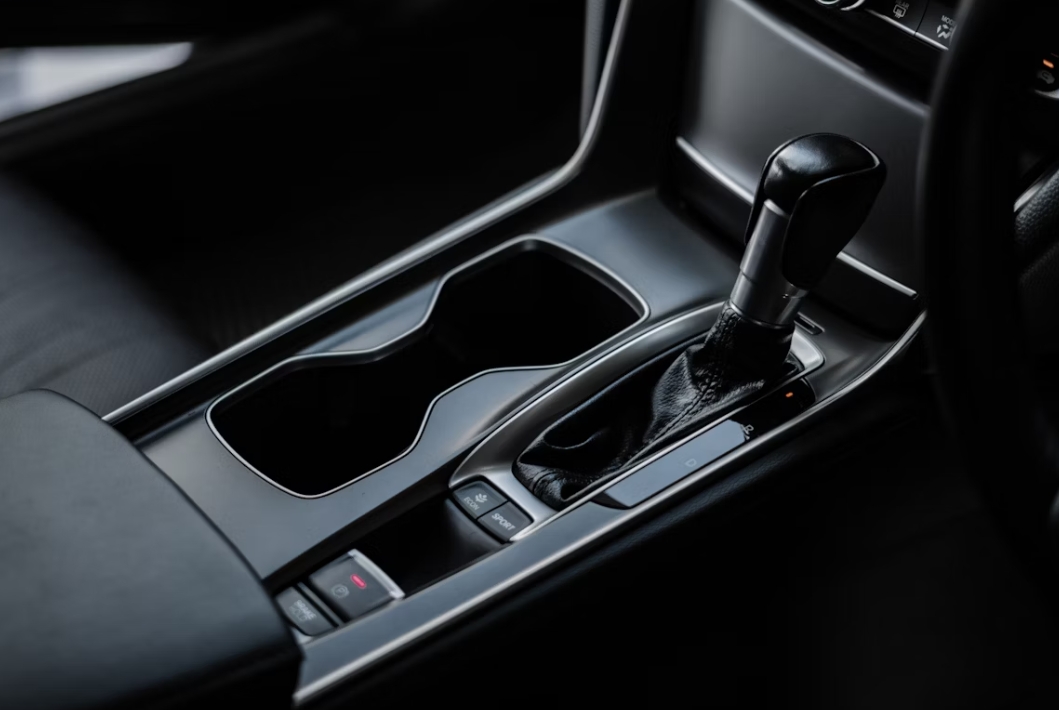
An EDR is a recorder, usually built into the airbag control module, that saves a few seconds of vehicle data when a crash occurs. That data typically includes speed, accelerator and brake use, seat belt status, and how sharply the vehicle’s speed changed on impact. In an accident investigation, this vehicle crash data provides an objective record that can be compared with what drivers and witnesses report.
Federal rules do not require automakers to install EDRs, but nearly all do. NHTSA estimates that 99.5 percent of model year 2021 passenger cars and light trucks have one. Any EDR that is installed must record at least 15 specific types of data, and most record far more.
What Are the Latest Advancements in EDR Technology?
EDRs Now Record Driver-Assistance Systems
One of the biggest changes is how much EDRs can record beyond the basics. A November 2025 NHTSA study reviewed EDR reports from model year 2022–2024 vehicles made by 15 automakers.
Every one recorded more than the federal minimum, ranging from 9 to 405 additional data elements. Eight recorded whether adaptive cruise control was on, seven recorded automatic emergency braking status, and five recorded forward collision warnings.
Some go even further. General Motors’ (GM) EDR output included details about objects its driver-assistance sensors had detected. Data like this can help show whether a vehicle’s safety systems were active before a crash.
EDR Data Retrieval Reaches Deeper Into the Vehicle
The way EDR data is retrieved is changing, too. As vehicles store more information across more systems, the tools used to access that data have had to keep up. Bosch, maker of the Crash Data Retrieval (CDR) tool NHTSA uses in its own crash investigations, updates its software several times a year.
Additionally, a 2025 update added retrieval support for General Motors’ active safety control module on many 2025 models, including several EVs. Automakers are also adding new ways to access EDR data. In late 2024, Tesla’s service documentation added instructions for retrieving EDR data through the vehicle’s standard diagnostic port.
The trade-off is that getting the complete record may take more than one step. One GM vehicle in NHTSA’s review stored its data across three modules, requiring three separate downloads.
Recording Windows Are Getting Longer
The amount of time captured before a crash is also changing. A federal rule will require EDRs to record 20 seconds before a crash instead of 5, taking ten readings per second instead of two. NHTSA estimated that 20 seconds would capture about 90 percent of drivers’ actions before a crash.
The rule will be effective September 1, 2028, so vehicles involved in today’s claims are only required to meet the five-second minimum.
Do Electric Vehicles Have EDRs?
Electric vehicles (EVs) fall under the same federal EDR rules as gas vehicles, and their EDRs record the same required information. NHTSA’s 2025 review included the Hyundai Ioniq 5, Volkswagen ID.4, and Tesla Model Y, and all three EVs recorded every data element that federal rules require.
The differences are mainly in how the data is retrieved and in a few EV-specific details. Some EVs record additional information, such as battery voltage or whether one-pedal driving was turned on.
In one-pedal mode, a driver can slow down and stop using only the accelerator. So when one-pedal driving is on, a brake reading alone may not show whether the driver tried to slow down.
How Reliable Is EDR Data, and Can It Show How a Crash Happened?
EDR data can provide valuable information about what a vehicle was doing before and during a crash, but it cannot explain the entire crash on its own. It records information from the vehicle’s sensors, such as speed, braking, and other vehicle functions. It does not show who was driving, why the driver acted a certain way, or what was happening outside the vehicle. It also does not include audio or video.
There are also factors that can affect how the data should be interpreted. One GM report, for example, notes that recorded speed can be affected by factors such as changes in tire size or wheels that lock up or slip.
As EDRs capture more information, interpreting the data can also become more complicated. Automakers do not always use the same names for the same features. Forward collision warning, for example, appeared under three different labels in Honda, GM, and Hyundai reports. NHTSA noted that reading these reports correctly may require manufacturer-specific training.
That is why EDR data is most useful as part of a larger investigation. NHTSA states that EDR data should be examined in conjunction with other available physical evidence. Scene measurements, vehicle damage, photos, video, and statements can provide context for what the data shows. When those sources do not line up with the EDR, that discrepancy can be an important part of understanding what happened.
EDR Data in Claims Investigations
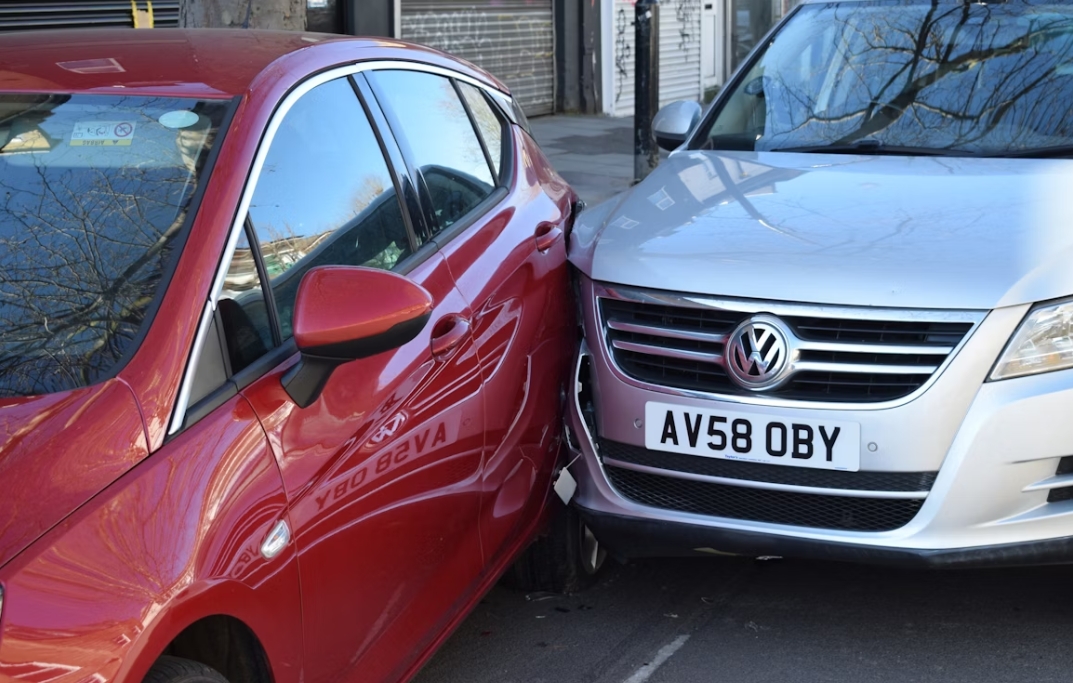
When drivers give conflicting accounts, EDR data can help show which version is consistent with what the vehicle recorded. Driver-assistance data can add another piece to the picture, such as whether the vehicle warned the driver or applied the brakes on its own.
Getting the most from that data also starts early in the claim. A few questions can help determine whether the complete record will be available:
- Does the vehicle have driver-assistance features, and will the download capture their status?
- Does the vehicle require a brand-specific tool or more than one download to access every module?
- Is it an EV with a one-pedal driving mode that could affect how brake data is interpreted?
- Could the vehicle be repaired, salvaged, or resold before the data is downloaded?
There are also legal limits on accessing EDR data. Under the federal Driver Privacy Act of 2015, EDR data belongs to the vehicle’s owner or lessee. Outside narrow exceptions, such as traffic safety research, retrieving it generally requires the owner’s consent or a court or administrative order.
The amount of information available will continue to grow as the 20-second recording requirement takes effect. Investigators will have more data about what happened in the moments leading up to a crash. But more data does not necessarily mean a clearer answer. During the rulemaking, SAE International cautioned that longer recordings could capture actions unrelated to the crash and lead to misleading conclusions without evidence from the scene.
As EDR technology continues to advance, the value of the data will depend on how well it is collected, interpreted, and considered alongside the rest of the evidence.
Accurate EDR data can provide valuable insight into what happened before a crash. Connect with our experts for investigative support that helps uncover the facts behind an auto claim.
Sources:
- Bosch Diagnostics. “CDR Tool Version 25.0 Software Product Information.” Bosch Diagnostics CDR, 2025, cdr.boschdiagnostics.com/cdr/sites/default/files/CDRv25.0_Information_external_webv1.pdf.
- “Event Data Recorders.” Federal Register, vol. 91, 18 May 2026, National Highway Traffic Safety Administration, www.federalregister.gov/documents/2026/05/18/2026-09849/event-data-recorders.
- Fixing America’s Surface Transportation Act. Pub. L. 114-94, div. B, title XXIV, subtitle C, secs. 24301–24302, 4 Dec. 2015, www.finance.senate.gov/download/fast-act&download=1.
- National Highway Traffic Safety Administration. Preliminary Regulatory Evaluation: Amending Part 563 Event Data Recorders. Docket No. NHTSA-2022-0021, 2022, downloads.regulations.gov/NHTSA-2022-0021-0024/attachment_2.pdf.
- Tesla. “Event Data Recorder Retrieval.” Model Y Service Manual, Tesla, 2025, service.tesla.com/docs/ModelY/ServiceManual/en-us/GUID-33EC585C-B871-4C9F-9B8C-48F2347E89B2.html.
- Wiacek, Christopher J., et al. NHTSA Crash Investigation Sampling System Event Data Recorder Data Element Benchmarking Study. Report No. DOT HS 813 741, National Highway Traffic Safety Administration, Nov. 2025, rosap.ntl.bts.gov/view/dot/87967/dot_87967_DS1.pdf.